Give your body two to three weeks to adapt before increasing doses. Unlike testosterone-affecting peptides or growth hormone secretagogues, MOTS-c does not directly alter hormonal production. Product quality significantly impacts side effect profiles. No evidence exists of permanent damage from MOTS-c use at typical research doses. Fatigue — GI issues, and energy fluctuations commonly improve by week two or three.
Metformin — the most commonly prescribed diabetes drug, works primarily through AMPK activation. SeekPeptides provides resources for evaluating research peptide quality and identifying reliable MOTS-c peptide buy sources. They can also create antibodies that neutralize not just the impurities but the actual peptide, making future doses ineffective. Unknown compounds entering your body create unpredictable reactions. Research-grade peptides (the type available online without prescription), often lack the quality controls of pharmaceutical products. Beyond the common side effects, MOTS-c carries several serious safety considerations that every researcher must understand before starting a protocol.
Limited human drug-product exposure data means long-term safety (route-specific risk), interaction risk, and patient-selection standards are not well established. MOTS-c stands for mitochondrial open reading frame of the 12S rRNA type-c. WADA lists mitochondrial open reading frame of the 12S rRNA-c (MOTS-c) as an example of an AMPK activator under S4.4 metabolic modulators.
StudyYearModelKey findings Lee et al. , Cell Metabolism,2015MiceMOTS-c activates AMPK, prevents age-related insulin resistance, reduces diet-induced obesity. What to expect from MOTS-c peptide use — realistic timelines (biomarker changes), body composition, energy and endurance effects, and community reports. The researchers demonstrated that MOTS-c activates AMPK — the enzyme that cells activate during energy stress (exercise, fasting, caloric restriction) — and that exogenous MOTS-c administration in mice prevented age-related insulin resistance, reduced obesity on a high-fat diet, and improved overall metabolic function. MOTS-c (Mitochondrial Open Reading Frame of the Twelve S rRNA type-c) is a mitochondrial-derived peptide, a signaling molecule encoded by a short open reading frame within the mitochondrial 12S rRNA gene. Get what matters in translational research, free to your inbox weekly.
MOTS-c before and after: results timeline

A 10 mg vial lasts for two weeks and a 40 mg vial for eight weeks, both aligning with the standard total of 5 mg per week, a complete standard cycle. The standard community-reported cycle is 1 mg daily , 5 on / 2 off, for 8 weeks, then 8 weeks off. This article presents information based on documentation rather than prescribing actions to take. The protocols — doses, and reactions mentioned here originate from both published studies and self-reported anecdotes from the community.
Within the aging and mitochondrial-support space, MOTS-c is sometimes mentioned alongside compounds like NAD+ precursors and Epitalon. Comparing the two highlights the gap between an established therapeutic class and an emerging research peptide, a distinction covered in our overview of the GLP-1 class. Repair-focused peptides such as BPC-157 and TB-500 are studied primarily for tissue healing and recovery, acting mainly on local repair processes and angiogenesis. However, the absence of reported harm in mice is not the same as demonstrated safety in humans, especially over the long term or at supraphysiologic doses.
This guide breaks down the real science behind MOTS-c (using the latest studies through 2026), so you can make an informed choice with your primary care provider. The animal data consistently shows metabolic benefits across multiple independent laboratories, which strengthens the case for translational relevance. D’Souza et al.2022MiceMOTS-c administration in aged mice restores exercise capacity and improves mitochondrial function to levels approaching young animals.
These quality controls cost more but provide assurance that what you are injecting is actually what you intend. Sourcing high-quality peptides from verified vendors dramatically reduces contamination-related adverse events. Sleep quality becomes even more important during MOTS-c protocols. Taking doses on workout days, particularly before exercise, can enhance the synergy between exogenous MOTS-c and exercise-induced AMPK activation.
The interest in MOTS-c for promoting healthy aging is fueled by enhanced physical performance in older mice (effects on age-related insulin resistance), and findings related to bone health (7). Bone loss was reduced in mice with menopause induced surgically, which serves as a standard model for studying osteoporosis. Several well-known peptides (including CJC-1295 and ipamorelin), function by stimulating the pituitary gland to release increased amounts of growth hormone. The majority of this research remains preclinical — involving cells and animal subjects. Among a select few mitochondrial-derived peptides that have been examined as signals transmitted from the mitochondria to the body, humanin is included alongside MOTS-c.
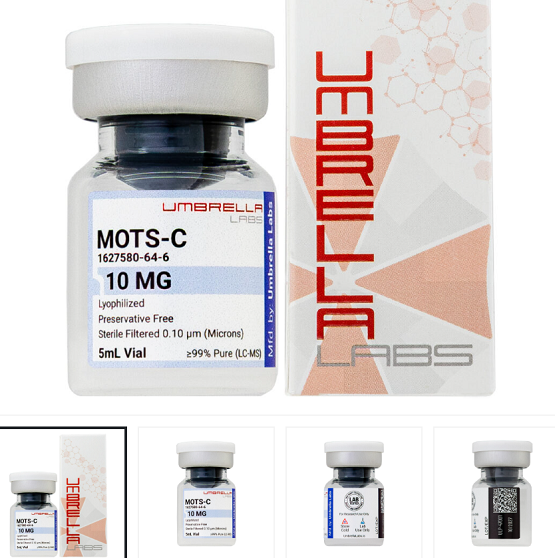
Typically (companies charge $60 or more for a 10 mg supply and rarely provide larger options), which is significant here since a 10 mg dosage is consumed within about a week at any substantial amount. When considering trying MOTS-c, the quality of the product is particularly important compared to most peptides due to its rapid degradation once combined. Growth Hormone Releasing Peptide-2 , GHRP-2, ranks among the most extensively researched synthetic peptides within the growth hormone secretagogues category.
This matters for anyone concerned about losing muscle as they age or during weight loss. It’s also one of the drivers behind the muscle wasting that comes with obesity and insulin resistance. They outperformed untreated middle-aged animals. People with lower MOTS-c levels tend to have higher BMI (more belly fat), higher fasting insulin, and worse insulin resistance scores. The effect was dose-dependent and consistent across multiple trials.
MOTS-c is real, scientifically credible biology, a 16-amino-acid peptide encoded in the mitochondrial genome that functions as a stress-response signal linking mitochondrial energy status to nuclear gene regulation. If you are managing a protocol like this — StackMyMed (our companion app) keeps your doses, timing, and interaction checks in one place. Whether this effect is sustained with regular training and whether it is meaningful for health outcomes in humans is not yet established by controlled trials. The mechanism by which exogenous MOTS-c crosses the cell membrane is not established. Endogenous MOTS-c is a real and biologically significant molecule.
Comments are closed