In recent years, the landscape of online gambling in the UK has evolved significantly, particularly with the introduction of self-exclusion schemes like GAMSTOP. While these initiatives aim to promote responsible gambling, they have also led some players to seek alternatives, such as non-GamStop casinos. These platforms offer a different approach, allowing players to engage in online gaming without the restrictions imposed by GAMSTOP. However, it is crucial for players to understand the implications of choosing non-GamStop casinos, including the importance of safety, licensing, and responsible gambling practices. This article will provide a detailed overview of non-GamStop casinos, including how to identify trustworthy sites, the various games available, and the potential risks involved.
Top 6 non-GamStop casinos
How to compare non-GamStop casinos: checkable criteria versus personal preferences
When comparing non-GamStop casinos, it is essential to distinguish between checkable criteria and personal preferences. Checkable criteria include factors such as licensing transparency, security measures, withdrawal processes, and player protections. These aspects can be verified through the casino’s website or regulatory bodies. On the other hand, personal preferences encompass elements like game variety, user interface, payment options, and mobile compatibility. Players should weigh these factors carefully to ensure they choose a casino that meets their needs while also adhering to safety standards.
For further context, see best non Gamstop. Check current terms, licensing claims and player protections before considering any site.
UKGC regulation, GAMSTOP, licensing and security
The UK Gambling Commission (UKGC) regulates gambling activities in the UK, ensuring that operators adhere to strict standards of fairness and safety. GAMSTOP is a self-exclusion scheme that allows players to restrict their access to online gambling sites for a specified period. However, it is important to note that non-GamStop casinos may not be subject to UKGC regulations, and their status does not guarantee safety or fairness. Players should conduct thorough research to verify the licensing and security measures of any non-GamStop casino they consider.
Table games and roulette: RTP and house edge explained
Table games, including roulette, are popular among players at non-GamStop casinos. Understanding the concepts of Return to Player (RTP) and house edge is crucial for making informed decisions. RTP is a theoretical percentage that indicates how much a game pays back to players over time, while the house edge represents the casino’s advantage. For example, a roulette game with an RTP of 97% means that, theoretically, players can expect to receive £97 back for every £100 wagered in the long run. However, individual results may vary, and players should be aware of the risks involved.
Slots: RTP and volatility explained
Slots are another popular choice at non-GamStop casinos, offering a wide variety of themes and gameplay styles. Similar to table games, slots have RTP percentages that indicate the expected return to players. Additionally, volatility is an important factor to consider, as it describes the risk associated with a particular slot game. High volatility slots may offer larger payouts but less frequent wins, while low volatility slots provide smaller, more consistent wins. Players should assess their risk tolerance and preferences when selecting slots to play.

Casino bonuses and their conditions
Casino bonuses are often a significant draw for players at non-GamStop casinos. These bonuses can come in various forms, such as welcome bonuses, free spins, and loyalty rewards. However, it is essential to read the terms and conditions associated with these bonuses, as they often include wagering requirements and restrictions. Wagering requirements specify how many times a player must wager the bonus amount before they can withdraw any winnings. Understanding these conditions can help players make the most of their bonus offers.
Payments, withdrawals and KYC verification
When engaging with non-GamStop casinos, players should be aware of the payment methods available for deposits and withdrawals. It is crucial to choose a casino that offers secure and convenient payment options. Additionally, players may be required to undergo Know Your Customer (KYC) verification, a process designed to prevent fraud and ensure that players are of legal age. This verification may involve submitting identification documents and proof of address, which can take time but is essential for maintaining a safe gaming environment.
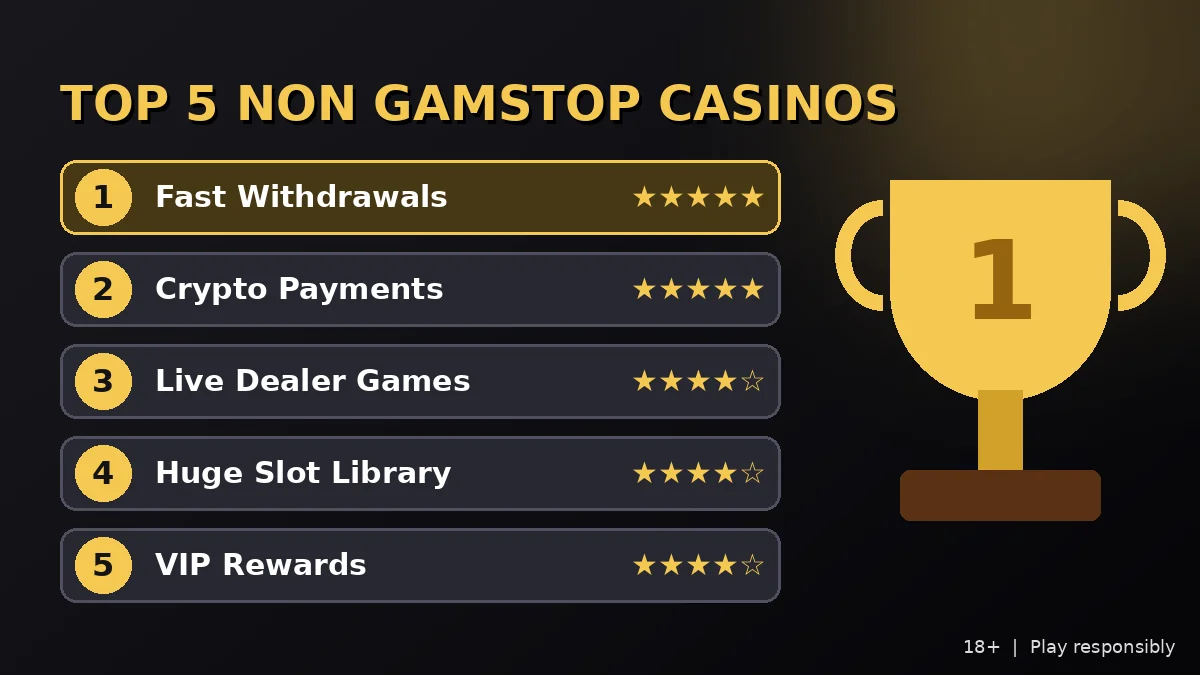
Common mistakes when choosing a casino
Players often make common mistakes when selecting non-GamStop casinos, which can lead to negative experiences. One frequent error is failing to verify the casino’s licensing and security measures. Another mistake is overlooking the importance of reading terms and conditions, particularly regarding bonuses and withdrawals. Additionally, players may not consider their personal preferences, such as game selection and payment methods, leading to dissatisfaction. Taking the time to research and compare options can help players avoid these pitfalls.
Safer gambling
While non-GamStop casinos provide an alternative for players, it is crucial to approach gambling responsibly. Setting time and spending limits can help prevent excessive gambling. Players should avoid using borrowed funds or money needed for essential expenses. If gambling stops being a recreational activity, it is advisable to take breaks and seek help. Resources and support services are available for those struggling with gambling issues. Remember, gambling should never be viewed as a source of income.
For those interested in exploring options, UK sites not on Gamstop can provide a range of alternatives, but it is essential to proceed with caution and awareness of the risks involved.
A practical conclusion
In conclusion, non-GamStop casinos offer an alternative for players seeking to engage in online gambling without the restrictions of GAMSTOP. However, it is vital to approach these platforms with caution, ensuring that safety, licensing, and responsible gambling practices are prioritised. By understanding the differences between checkable criteria and personal preferences, players can make informed decisions that enhance their gaming experience while minimising risks.
Comments are closed