
Top 6 Lenders for Tractor Financing: 2026 Ranking
Last updated: 2026-11-10
Finding the right financing for a tractor is a lot like picking the right implement for a difficult field. If the terms are too stiff, you might find yourself struggling through the growing season without enough liquidity. A bad loan can weigh down a farm’s cash flow just as much as a heavy plow in wet soil.
You wouldn’t use a light cultivator on heavy clay without adjusting your depth, so don’t approach high-interest debt without adjusting your repayment strategy to match your specific operational needs. The best choice depends entirely on whether a buyer is looking for a brand-new sub-compact for a small homestead or a used combine for a large-scale operation.
Some lenders focus on speed and ease, like digital-first lenders that prioritize rapid disbursement. Others offer specialized agricultural terms, such as seasonal payment structures that account for the “lull” between harvest and planting. Understanding these differences is the key to keeping a farm running smoothly without unnecessary financial stress.
Choosing the wrong product doesn’t just cost you interest; it costs you the flexibility required to react to market shifts, fluctuating fuel costs, or unexpected equipment repairs. You need a plan that leaves room for the unexpected.
- Kubota
- JetzLoan
- John Deere
- AgDirect
- Farm Credit
- Addition Financial
How the Best Lenders Were Evaluated
The evaluation focused on matching specific lending products to the actual needs of modern farmers and landowners. This means looking at more than just a single interest rate. We analyzed how quickly funds are released, the ease of the application process, and whether the lender understands the seasonal nature of agricultural income and equipment depreciation.
We looked at how lenders handle collateral, specifically, whether they require a lien on the machine itself or if they allow for more flexible asset backing. Lenders were weighed on their specialization in the agricultural sector versus general personal lending. A lender that understands crop cycles and equipment value often provides more flexible terms.
This might include allowing for balloon payments or deferred interest during months when cash flow is tight due to weather delays. Conversely, a general personal lender might demand rigid monthly payments that don’t align with a farm’s actual income stream. This ranking prioritizes those who offer clear, actionable options for both heavy-duty machinery and smaller utility needs.
Whether you are a hobbyist or a multi-generational rancher, the goal is to find a viable path to ownership. We want to ensure the financing supports your work rather than complicating it.
| Lender Name | Max Loan Amount | Funding Speed | Credit Requirements | Best For |
|---|---|---|---|---|
| Kubota | see site | see site | see site | New Kubota Equipment |
| JetzLoan | $35,000 | 24 hours | No hard credit pull | Fast cash / Bad credit |
| John Deere | see site | see site | see site | New & Used Deere Gear |
| AgDirect | see site | see site | see site | New/Used Ag Equipment |
| Farm Credit | see site | see site | see site | Rural Producers |
| Addition Financial | see site | see site | see site | Personal/Business Banking |
Understanding Loan Structures: Interest vs. Lease
Before committing to a lender, you must decide whether you want to own the equipment outright or simply use it for a specific period. This decision significantly changes your tax implications and your balance sheet. It is a choice between long-term equity and short-term liquidity.
Equipment Loans
An equipment loan is a traditional debt structure where you are the owner from day one. You are responsible for the maintenance, insurance, and storage. This is often the best route for heavy machinery that has high resale value and long lifespans, such as a tractor used for 15+ years.
The primary advantage here is equity. As you pay down the principal, you own more of the asset, which can be used as collateral for future needs. However, the monthly payments are typically higher and more frequent. This can be a strain if you don’t have a steady stream of income year-round.
If you can manage the monthly outlays, the long-term payoff is significant. You aren’t just paying for a tool; you are building an asset that stays on your books. It is a commitment that rewards patience and consistent cash flow.
Equipment Leases
Leasing is often more attractive for those who want to stay current with the latest technology. If you find that tractor technology evolves every three or four years, a lease allows you to cycle through equipment without the headache of selling a used machine. It keeps your fleet modern and efficient.
Leases often have lower monthly payments than loans, which helps preserve cash flow. However, you don’t own the machine at the end of the term unless you exercise a purchase option. You may also be limited in the number of hours you can operate the machine before facing penalties.
It is a trade-off between lower immediate costs and long-term ownership. If your priority is minimizing monthly overhead and avoiding the hassle of resale, leasing might be the path. Just keep an eye on those hour limits.
The 2026 Tractor Financing Leaderboard
1. Kubota
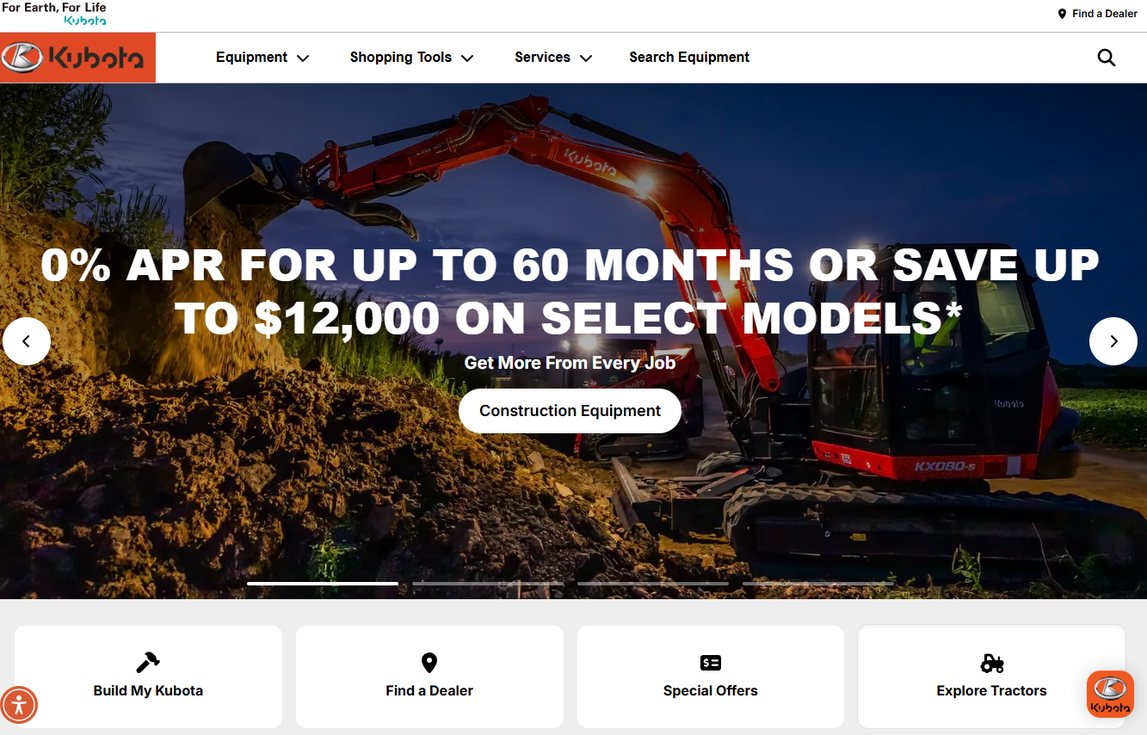
Kubota sits at the top of the list because of its highly specific, aggressive financing offers for its own machinery. They understand that a farmer needs a reliable machine without breaking the bank. Their programs often include very low APR options that make high-end equipment much more accessible.
Because they are the manufacturer, they can subsidize interest rates in a way that third-party banks simply cannot do. For those looking at specific models, the options are quite enticing. One can find 0% APR for up to 60 months on select models, or perhaps save up to $12,000 on certain purchases.
They also offer $0 down with 2.99% APR for 36 months on new Kubota Sidekick models. This type of aggressive promotional financing is designed to help farmers bridge the gap between a used machine that might break down and a new machine that is fully covered by warranty.
Pros:
- Extremely competitive APR for specific models.
- Low down payment options available.
- Directly tied to the equipment being purchased.
Cons:
- Financing is largely restricted to Kubota equipment.
2. JetzLoan
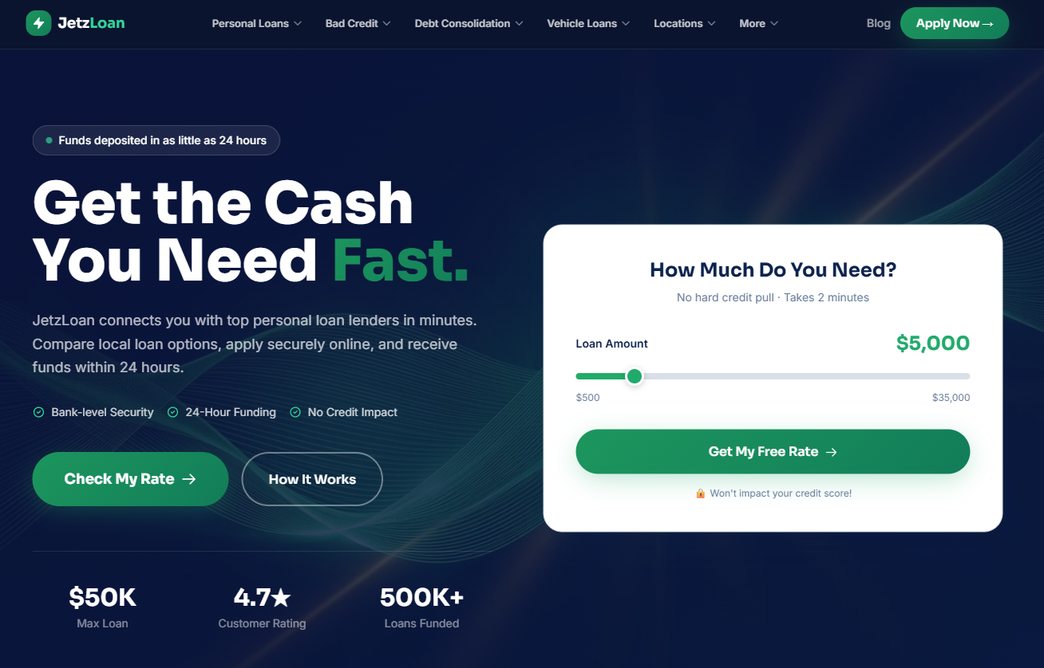
Sometimes, a farmer needs cash in hand rather than a direct equipment loan. JetzLoan serves as a fast-acting bridge for those who need liquidity immediately. They specialize in connecting users with top lenders in a very short timeframe, often within just a few minutes of applying.
This is critical in an auction environment where the hammer falls and the money is expected almost instantly. This is an ideal choice for someone with less-than-perfect credit who needs to jump on a sudden auction deal. With a $50,000 maximum loan and funds that can be deposited in as little as 24 hours, it is built for speed.
While a traditional bank might take two weeks to process a loan application, JetzLoan is designed to move at the speed of an active auction. It is a utility for when time is more important than finding the absolute lowest interest rate.
Pros:
- No hard credit pull during the initial check.
- Extremely fast funding, sometimes within 24 hours.
- High customer rating for the ease of the process.
Cons:
- Loan amounts are capped at a relatively low $50,000.
3. John Deere
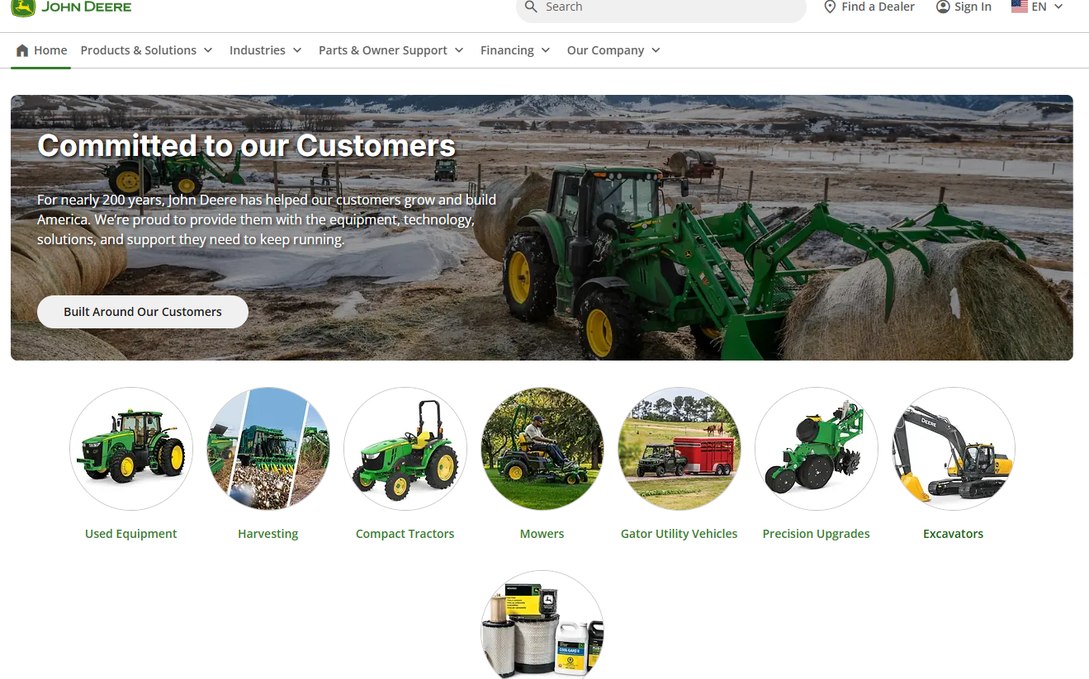
John Deere is a titan in the industry, providing a sense of stability that is hard to match. Their financing is built around the idea of long-term partnership. They offer solutions for everything from small compact tractors to massive harvesting equipment used in large-scale production.
Their credit wing is accustomed to handling complex financial structures, including seasonal repayment schedules that align with harvest cycles. Because they have been around for nearly 200 years, their financing is deeply integrated with their parts and service ecosystem.
Whether you are buying new or looking at used equipment, their financial arms are designed to keep your operation running without interruption. They offer a “peace of mind” factor that is difficult for smaller, newer fintech companies to replicate.
Pros:
- Comprehensive support for new and used equipment.
- Deeply established reputation in the agricultural community.
- Integrated with parts and maintenance solutions.
Cons:
- Terms may be less flexible than specialized ag-lenders.
4. AgDirect
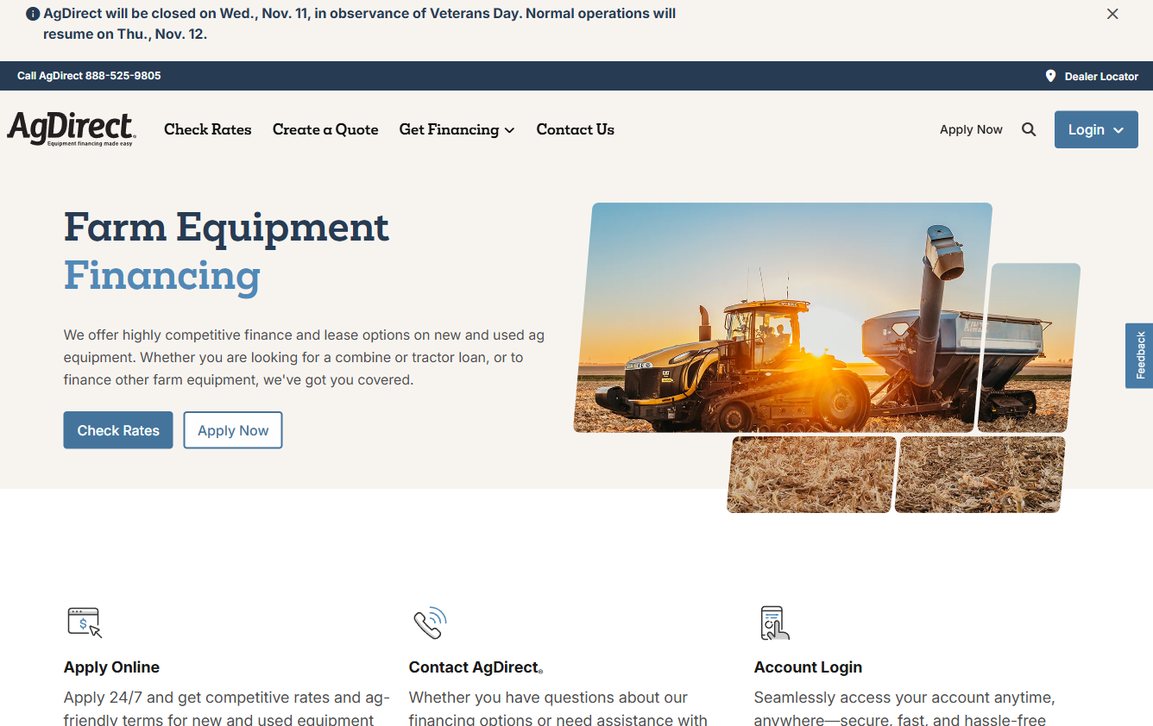
AgDirect functions as a dedicated specialist for the agricultural world. They do not just look at the machine; they look at the farm. They offer highly competitive finance and lease options for new and used equipment, whether it is coming from a dealer or a private party.
This makes them a versatile tool for the modern farmer who may not want to buy from a major dealer but wants to acquire a high-quality used machine from a neighbor. This versatility is a major advantage. If you find a tractor at an auction or from a neighbor, AgDirect can likely help you secure the funds.
Their application process is available 24/7, allowing farmers to work on their own schedule during the busy season. This is a significant advantage during the spring planting or fall harvest when sitting down at a computer for a lengthy bank meeting is simply not an option.
Pros:
- Flexible for both dealer and private party purchases.
- Available 24/7 online application.
- Specialized in ag-friendly terms for various equipment types.
Cons:
- Requires a specialized application process compared to general loans.
5. Farm Credit
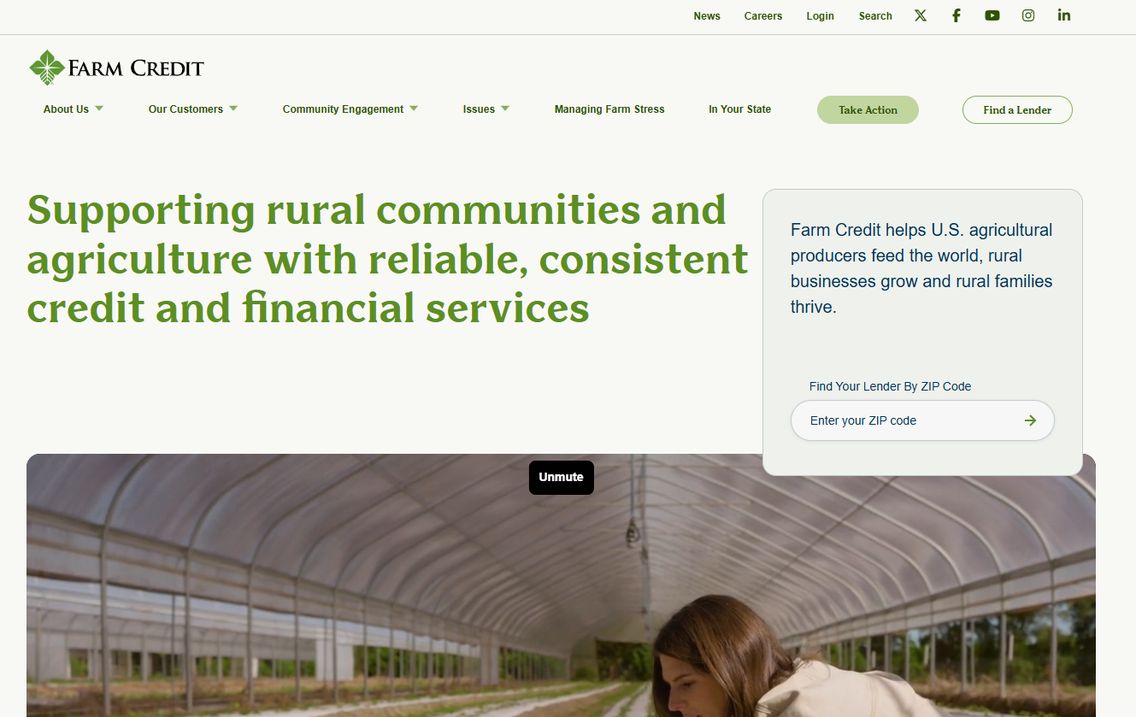
Farm Credit operates as a massive nationwide network of customer-owned cooperatives. This means the organization is fundamentally tied to the success of the people it serves. They support over 615,000 farmers, ranchers, and agribusinesses across the entire United States.
Because they are cooperatives, their focus remains on providing reliable and consistent credit to rural communities, rather than maximizing shareholder dividends for urban investors. This makes them a cornerstone for large-scale agricultural producers who need deep, long-term financial relationships.
They understand that a bad drought or a sudden drop in commodity prices shouldn’t necessarily result in a default, provided the farmer has a history of responsible management. This cooperative approach is their hallmark.
Pros:
- Customer-owned cooperative structure.
- Massive nationwide reach with local expertise.
- Deeply rooted in the agricultural community.
Cons:
- Can be more complex for small, non-agricultural users.
6. Addition Financial
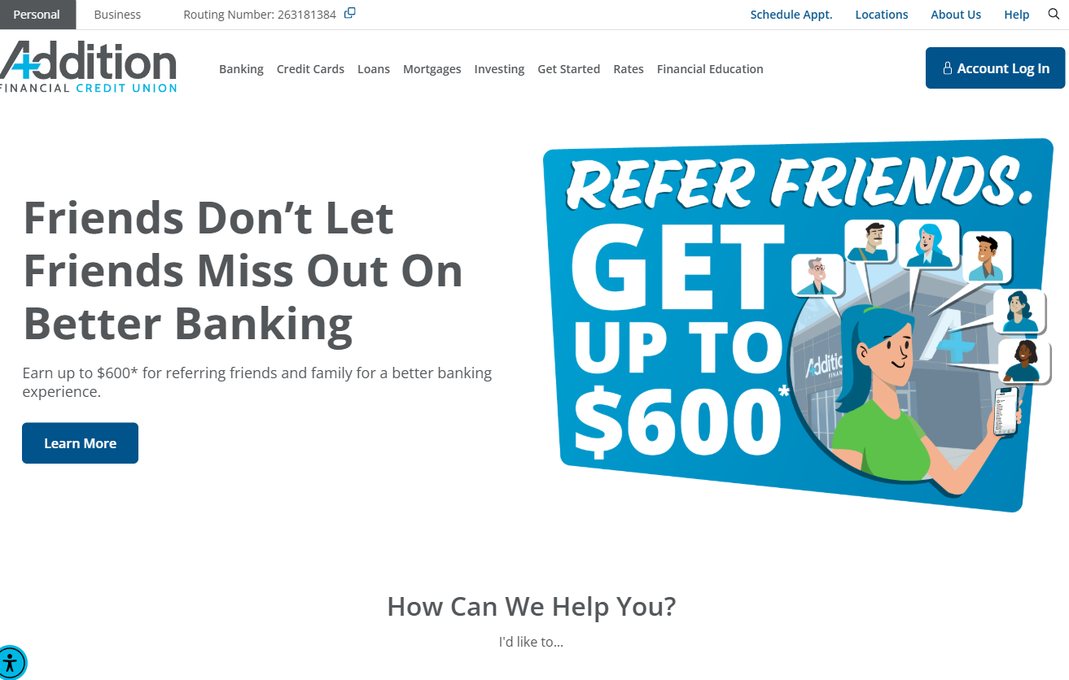
Addition Financial acts as a versatile credit union option for those who need a mix of personal and business banking. While not exclusively an agricultural lender, their competitive rates for loans and credit cards make them a solid choice for general equipment needs.
They are particularly useful for the diversified farmer who might need to finance a tractor one month and a new truck or a small workshop renovation the next. They offer a wide range of services, from simple checking accounts to business-oriented loans.
For a small landowner or a hobby farmer who needs a versatile banking partner, they provide a level of accessibility that specialized lenders sometimes lack. Their member-focused model often leads to more personalized service than a massive, impersonal commercial bank.
Pros:
- Wide range of personal and business banking tools.
- Competitive rates on various loan products.
- Member-focused credit union model.
Cons:
- Lacks the specialized agricultural terms of dedicated farm lenders.
Due Diligence: A Checklist for Equipment Buyers
Before you sign a promissory note, you need to conduct a thorough audit of the deal. Financing is more than just a number; it is a legal commitment that can impact your ability to borrow for other essential needs, such as seed, fertilizer, or land expansion.
- Verify the Total Cost of Ownership (TCO): Do not just look at the monthly payment. Calculate the interest paid over the life of the loan, plus the expected maintenance costs for that specific machine model. A cheaper machine with a higher interest rate can end up costing more than a premium machine with 0% financing.
- Check the Resale Value Projections: Some brands hold their value significantly better than others. If you are leasing, ensure the residual value at the end of the term is realistic. If you are buying, look at the blue book values for similar years and hours to ensure you won’t be “underwater” on the loan.
- Review the Prepayment Penalties: If you have a particularly profitable year and want to pay off the tractor early to clear your debt, check if the lender will charge you a fee for doing so. This can make a significant difference in your long-term financial flexibility.
- Confirm Collateral Terms: Understand exactly what is being pledged. In some cases, the lender may want a lien on your entire farm operation, rather than just the specific tractor you are purchasing. Always aim for “limited recourse” or “non-recourse” options where possible.
Selecting the Right Path for Your Farm
Before signing any paperwork, it is vital to look at the total cost of borrowing. A low interest rate might look beautiful on paper, but if the term is too short, your monthly payments could crush your seasonal cash flow. Always calculate how the payment schedule aligns with your harvest and planting cycles.
If you are a wheat farmer, you want a payment schedule that recognizes your cash influx in late summer, rather than requiring heavy payments in the spring when your capital is tied up in seed and fuel. Avoid the mistake of rushing into a deal just because a machine is available at an auction.
While speed is important, ensure you understand the fine print regarding collateral and what happens if a crop fails. A flexible lender is often worth more than a cheap one when the weather does not cooperate. A lender that can offer a “payment holiday” or a restructuring during a difficult year is a partner, whereas a rigid lender is simply a creditor. Choose the partner that helps you grow.
Comments are closed